How this helps
Short repetition + a predictable, joyful finish teaches:
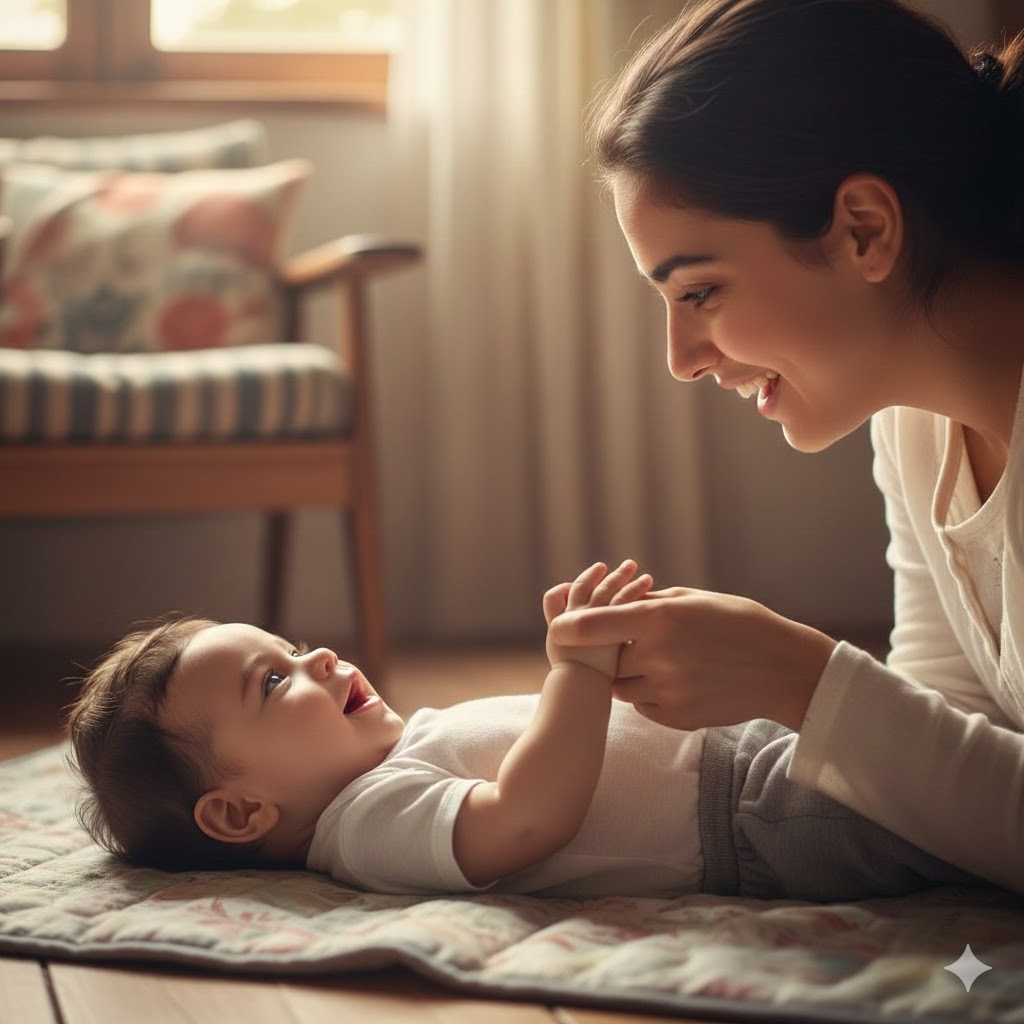
- Anticipation & memory: Babies learn the sequence and look forward to the tickle as a safe reward.
- Social trust & joy: Offering their hand or waiting for the tickle shows trust and shared delight.
- Turn-taking & gesture: When baby gives you a hand to ask again, they’re practicing communication and social requesting.
- Sensorimotor learning: Touch, tapping and gentle movement support hand awareness and body mapping.
After reading — 3 very simple observations
- Anticipation: Does your baby brighten, look at your face, or kick slightly before the tickle?
- Hand offering: Does your baby offer a hand or a foot after the first tickle to ask for another?
- Pleasure or pause: Do they smile, coo, wiggle happily — or do they pull away? (If they pull away, stop and soothe.)
Tips — Look for this tomorrow
- Repeat the cue: Use the same short phrase before the tickle (“Tickle time!”) so it becomes a gentle sleep/play ritual.
- Follow baby’s lead: If they bring their hand, repeat once more; if they tense or cry, stop and try a softer touch later.
- Make eye contact & name it: Say “You wanted tickle!” when they offer a hand — this builds intentional communication.
This story was crafted with the assistance of artificial intelligence.